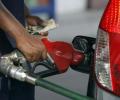
Petrol and diesel prices, which have been on a freeze for the past four months in view of assembly elections in states like Uttar Pradesh, need to be increased by over Rs 12 per litre by March 16 for fuel retailers to break even. International crude oil prices shot above $120 a barrel for the first time in nine years on Thursday before retreating a little to $111 on Friday, but the gulf between cost and retail rates has only widened. With international oil prices - on which domestic fuel retails are directly benchmarked - spiking in the last two months, state-owned fuel retailers "need a massive price hike of Rs 12.1 per litre on or before March 16, 2022, just to breakeven and a price hike of Rs 15.1 is required" after including margins for oil firms, ICICI Securities said in a report.
Other decisions piled up include rationalisation of GST rate slabs, correction of inverted duty on certain items and inclusion of petroleum products.
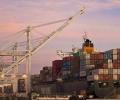
The country's exports rose by 48.34 per cent to $32.5 billion on account of healthy growth in shipments of petroleum products, gems and jewellery, and chemicals, leather and marine goods, according to the data released by the Commerce Ministry on Thursday. Imports in June too rose by 98.31 per cent to $41.87 billion, leaving a trade deficit of $9.37 billion as against a trade surplus of $0.79 billion in the same month last year. During April-June 2021, the exports increased by 85.88 per cent to $95.39 billion.
While the import of gold fell by about 11 per cent to $2.58 billion in February as against $2.89 billion in the corresponding month last fiscal, inward shipments of petroleum products were down by nearly 8 per cent to $9.37 billion.
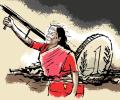
Finance Minister Nirmala Sitharaman will present the much-awaited 2022-23 Union Budget on February 1. While there has been strong recovery in some sectors, touch services like hospitality, tourism and leisure continue to suffer after two Covid-19 waves. Household savings have been hit due to increased spending on health care. Consumption has still not reached pre-pandemic levels.

Finance, oil ministry tussle over exports.

Increase in first half of FY14 comes despite a fall in average crude prices; weak rupee helps.
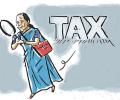
The net indirect tax collection in 2020-21 grew 12.3 per cent annually to Rs 10.71 lakh crore, thereby exceeding the target set in revised estimates, the Finance Ministry said on Tuesday. The mop-up through indirect taxes, which include GST, Customs and excise duties, was Rs 9.54 lakh crore in 2019-20. In the Revised Estimates (RE) for 2020-21, the target was set at Rs 9.89 lakh crore. Net collections from Goods and Services Tax (GST) stood at Rs 5.48 lakh crore during 2020-21, an eight per cent drop compared to Rs 5.99 lakh crore in the previous fiscal year.

RIL said it had launched 'an internal probe' into its staff's detention.
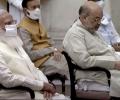
The reshuffle had politics at its heart, so the biggest complement of new ministers, both Cabinet rank and below, came from UP, which will see assembly elections in a few months.
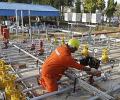
Petroleum Minister Dharmendra Pradhan on Tuesday put state-owned ONGC and OIL on notice saying oil and gas reserves they hold need to be monetised through joint ventures with domain experts or the government will take them away and auction them. Speaking at BNEF Summit, he said state-owned firms cannot indefinitely sit on resources when the nation is a net importer of oil and gas. Despite India bidding out acreages to private and other companies since the 1990s, Oil and Natural Gas Corporation (ONGC) and Oil India Ltd (OIL) hold a "sizeable number of acreage for years," he said.

'He is positive and likes to get work done,' is how a retired bureaucrat described him. 'I assume he will push the reform agenda with strength.'

India's total purchase of oil from Russia in a month is probably less than what Europe does in an afternoon, External Affairs Minister S Jaishankar said.

The blaze at the Oil India Ltd's oil well is so massive that it can be seen from a distance of more than two kilometres, eyewitnesses said.

RIL, Capgemini, IndiGo among companies which have offered to pay their employees' vaccination cost.
Pakistan interested in importing furnace oil, diesel: Pak Petroleum Min.
Petrol and diesel prices are likely to be hiked this week as oil companies prepare to pare losses accumulated from keeping rates steady for over four months in the run-up to assembly elections in five states, including UP, despite international oil prices jumping to a 13-year high of $140 per barrel. West Texas Intermediate crude futures, the US oil benchmark, rose to $130.50 per barrel on Sunday evening, its highest since July 2008, before retreating. The international benchmark, Brent crude, hit a high of $139.13 at one point overnight, also its highest since July 2008.
At present, India has 56,999 fuel outlets. Of those, only 6,276 are owned by private companies
Trade deficit marginally widened to $9.85 billion as against $9.72 billion in February 2019.

Sri Lanka's new Finance Minister Ali Sabry on Tuesday resigned, a day after President Gotabaya Rajapaksa appointed him after sacking his brother Basil Rajapaksa amidst the island nation's worst economic crisis.
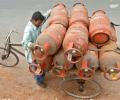
A shortfall in LPG supply from Aramco has led to huge booking backlog across states. To meet the backlog, India has asked Abu Dhabi National Oil Company for two additional cargos of LPG, but that may take another 10 days to reach.

Tirumurti voiced deep concern for the safety and security of thousands of Indian citizens, including students, stranded in Ukraine.
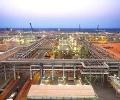
It calculated that the government should have got an additional profit share of $ 115.263 million.

The 12-digit unique number that the UIDAI will generate will be combined with the the smart card project of the Oil Ministry for distribution of PDS kerosene and domestic LPG through biometric identification of beneficiaries.
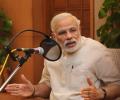
Modi government plans to set up a committee of five or six chief ministers to suggest ways to promote digitisation.
Petrol and diesel prices were on Tuesday hiked by 80 paise a litre while domestic cooking gas prices were increased by Rs 50 per cylinder, ending an over four-and-half month election-related hiatus in rate revision, sources said. Petrol in Delhi will now cost Rs 96.21 per litre as against Rs 95.41 previously while diesel has gone up from Rs 86.67 per litre to Rs 87.47. Simultaneously, the price of a non-subsidised LPG cylinder has been increased to Rs 949.50 for each 14.2-kg bottle in the national capital.
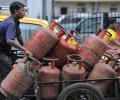
Only 48.3 per cent of the rural households used LPG, while the figures were much higher in urban areas at 86.6 per cent, according to a NSO report.

Government sources said the GoM on coronavirus crisis also reviewed various measures being initiated by concerned ministries to allow partial economic activity in 'non-hotspot zones' from April 20.

The Congress took out marches and observed bandh at several places on Saturday to protest against rising fuel prices.
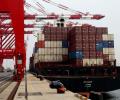
According to data released by the commerce and industry ministry, exports stood at $25.01 billion in the month. The fall is only the second time exports contracted in the past year.

With the first quarter gross tax mop-up reaching Rs 5.6 lakh crore, Icra Ratings on Friday said the government is set to exceed the budgeted tax collection target of Rs 22.2 lakh crore for 2021-22, led by indirect taxes. The government has budgeted a modest 9.5 per cent growth in tax collections at Rs 22.2 lakh crore for FY22, over FY21 collections of Rs 20.2 lakh crore. However, despite the second wave of the pandemic, the April-June quarter tax collections rose to Rs 5.6 lakh crore, which is 39 per cent higher than Q1 of FY20.

Mullah Muhammad Hassan Akhund is appointed as Prime Minister with two deputies Mullah Abdul Ghani Baradar and Molavi Abdul Salam Hanafi.

With domestic retail fuel prices jumping to record high on rising international oil rates, India on Thursday pressed oil cartel OPEC for 'affordable' oil price within a 'reasonable band' and that the producers should phase out production cuts. OPEC nations such as Saudi Arabia have traditionally been India's principal oil source. But, OPEC and its allies, called OPEC+, ignoring its call for ease supply curbs had led to the world's third-biggest oil importer tap newer sources to diversify its crude oil imports. As a result, OPEC's share in India's oil imports has dropped to about 60 per cent in May from 74 per cent in the previous month.

The GoM will suggest various development, economic and social steps to be taken for the two UTs which will come into existence on October 31, sources said.

Mukesh Ambani's Reliance Industries (RIL) might be denied a higher gas price from its D1 and D3 fields until the arbitration process with the government is over and a third-party expert report on the fall in output at the KG-D6 block is out.

Violation of the provisions entails a punishment of a jail term of up to five years or with fine up to Rs one crore or with both.

The Centre's push to sell Air India on priority has led to delays in other strategic divestment proposals, such as privatising United India Insurance, as well as ongoing transactions, such as Shipping Corporation of India (SCI) and Bharat Petroleum Corporation (BPCL), revealed multiple officials involved in the process. The Department of Investment and Public Asset Management (DIPAM) is yet to take new privatisation recommendations of the NITI Aayog to the core group of secretaries on disinvestment (CGD) headed by the Cabinet secretary, said one of the officials. The priority now is to ensure all approvals for Air India are in place since the government intends to hand over the national carrier as early as this month.

Minister of state for petroleum and natural gas Jitin Prasada in a written reply to a question in the Lok Sabha said the finance ministry is yet to approve the oil bonds. Indian Oil, Bharat Petroleum and Hindustan Petroleum lost Rs 11,853 crore (Rs 118.53 billion) in revenues on not being allowed to raise LPG and kerosene prices in line with the cost during April- September.

Divestment Ministry on Friday said it has received in-principle clearance from Petroleum Ministry and is going ahead with the sale of government equity in Oil India Ltd (OIL).

Almost all infrastructure ministries continued spending on capex throughout the lockdown, even as the Centre tried to maintain some semblance of economic normalcy.
 © 2026 Rediff.com - Advertise with us - Disclaimer - Privacy Policy - Sitemap - Feedback - About us - Terms of use - Grievances